
Check fuel supply, oil, coolant, battery condition, leaks, wiring, alarms and ventilation openings.
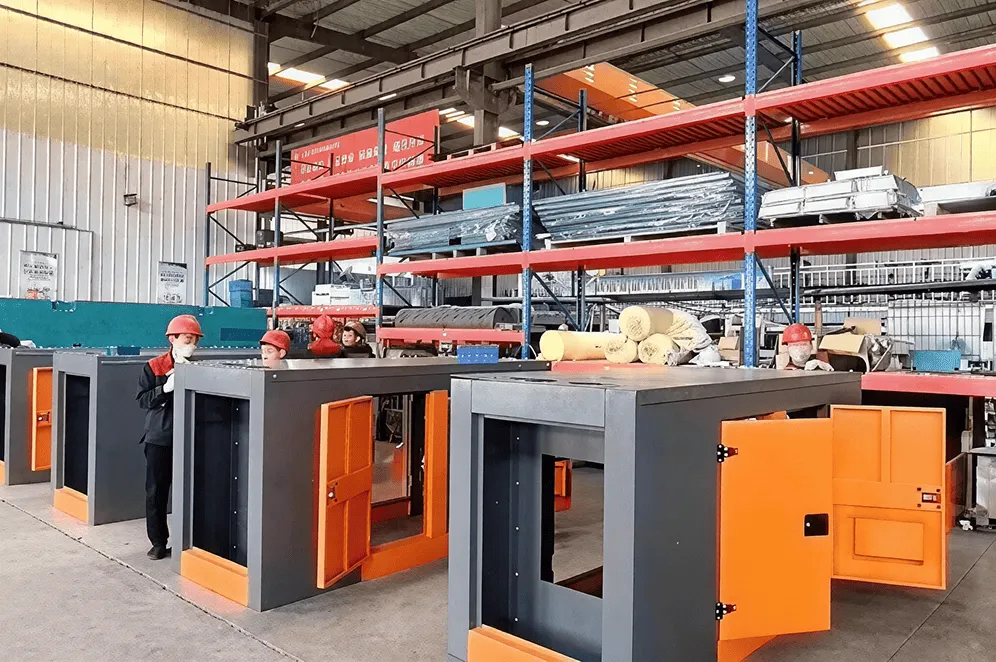
Diesel Power Configured for the Real Load
Diesel Generator Sets Built Around Your Site Conditions
Select standby or prime power, match the enclosure to the installation, and configure voltage, frequency, controls and mobility for your project. Zentramo helps turn a load list into a practical generator specification before you buy.
Open, silent, trailer and container configurations • 50 Hz / 60 Hz project options • ATS and control integration available
Four Decisions Shape the Right Diesel Genset
Load profile
Running kW is only the start. Motors, pumps, compressors and other inductive loads can make starting demand the controlling factor.
Duty rating
Standby power supports outages; prime power supports extended variable-load operation where the grid is absent or unreliable.
Installation environment
Indoor rooms, urban sites, dusty mines and mobile projects require different airflow, noise protection, filtration and access.
Electrical interface
Confirm phase, voltage, frequency, earthing, ATS behavior and downstream switchgear before production.
Choose the Structure Before You Compare Prices
The same nominal output can behave very differently as a project solution. Start with the housing and mounting format that fits the site, then finalize engine, alternator, controls and accessories.
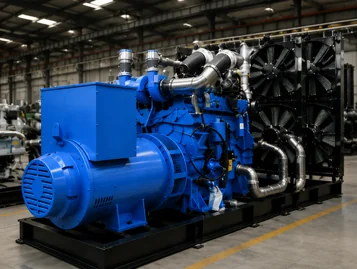
Open Type Diesel Generator Set
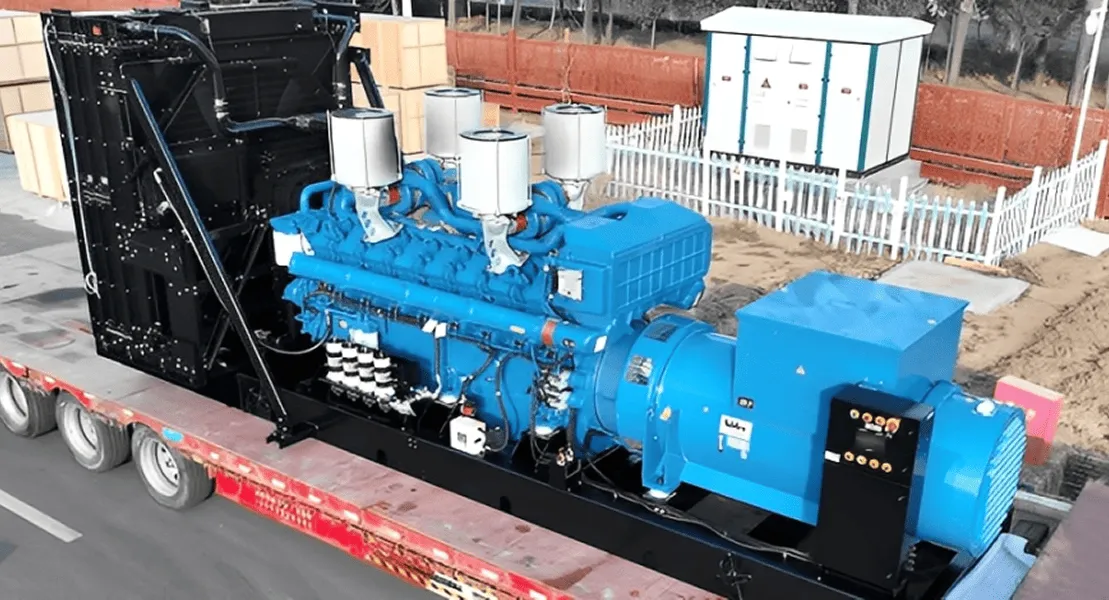
Direct access to the engine, alternator and cooling package makes inspection and servicing straightforward. Best suited to dedicated generator rooms or protected industrial areas with planned ventilation, exhaust and acoustic treatment.
Best for: indoor plant rooms and controlled installations
Selection focus: airflow, exhaust routing and service clearance
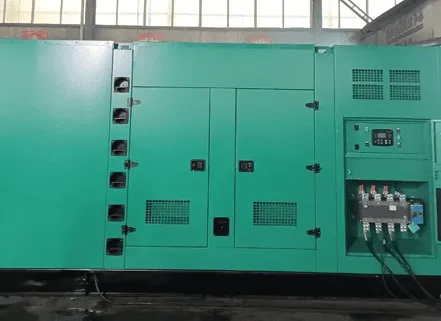
Silent Diesel Generator Set
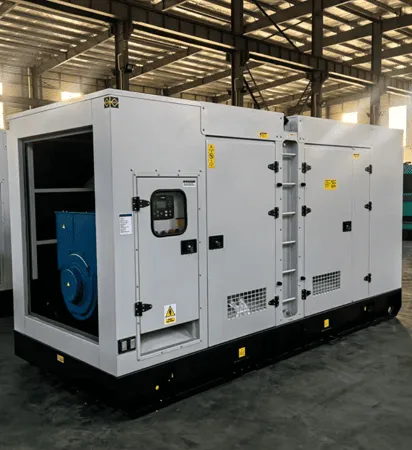
An enclosed canopy helps manage weather exposure and site noise while keeping the power package compact. Select it for factories, commercial buildings, hospitals, hotels or projects close to occupied areas.
Best for: outdoor or noise-sensitive sites
Selection focus: acoustic target, ambient temperature and maintenance-door access
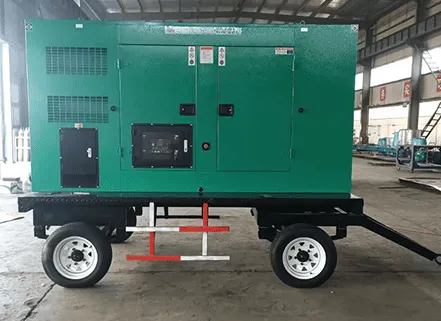
Trailer-Mounted Diesel Generator
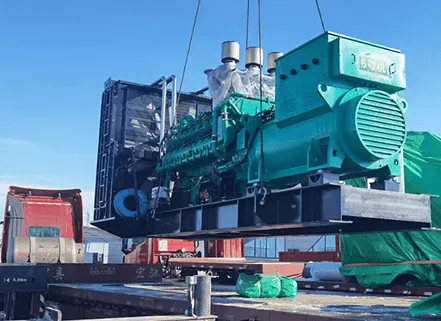
Combines the genset with a mobile chassis for projects that move between locations. It is a practical route for construction, rental fleets, emergency works and temporary power when deployment speed matters.
Best for: changing job sites
Selection focus: towing requirements, axle/brake rules and operating stability
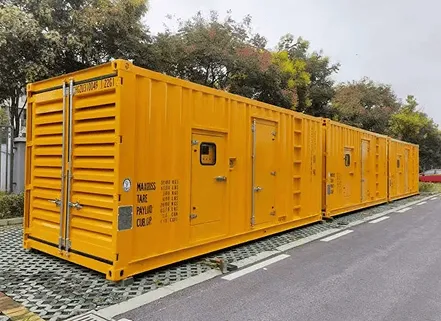
Containerized Diesel Generator Set
A protected container layout supports high-output, remote and harsh-environment projects where integrated ventilation, access, fuel planning and site security must be considered as one package.
Best for: mining, infrastructure and packaged power plants
Selection focus: container footprint, cooling, filtration and external connections
Build the Specification from the Load Outward
A useful quotation should show more than a model number. These are the fields that allow two generator offers to be compared on the same basis.
| Decision field | Typical project options | What to confirm |
|---|---|---|
| Power rating | Standby or prime duty, stated in both kW and kVA | Continuous running load, largest starting load, diversity and future reserve |
| Electrical output | Single- or three-phase; project voltage; 50 Hz or 60 Hz | Destination standard, earthing system and connected switchgear |
| Engine platform | Project-selected diesel engine family | Fuel quality, local parts access, emissions requirement and operating hours |
| Alternator | Brushless alternator with AVR; project-selected brand and protection | Motor-starting performance, insulation, enclosure and nonlinear loads |
| Controller | Manual, automatic mains-failure or remote-monitoring configuration | Required alarms, communication protocol and operator interface |
| Transfer system | Manual transfer or ATS integration | Utility incomer, number of poles, transfer logic and critical-load sequence |
| Enclosure and mounting | Open, silent, trailer or container type | Noise limit, weather, dust, corrosion exposure, transport and maintenance access |
| Fuel autonomy | Base tank or external fuel system sized for the operating plan | Target runtime, refueling access, bunding and local regulations |
Final ratings and component combinations are confirmed against the engine, alternator and controller data used for the selected configuration.
Prevent the Problems That Appear After Delivery
The set starts, but the largest motor will not accelerate
Consequence:
Voltage dip, nuisance trips and stalled production during load pickup.
Response:
Size from the actual starting method and transient demand, not from the sum of nameplate running kW alone. Alternator selection and start sequence matter as much as engine output.
A standby-rated machine is used like a daily prime source
Consequence:
The equipment operates outside the intended duty basis, increasing service risk and reducing expected life.
Response:
Define outage frequency, annual hours and load variability before choosing the rating. For frequent or extended operation, quote on the correct prime-duty basis.
The enclosure fits the catalog but not the site
Consequence:
Recirculated hot air, restricted service access, excessive noise or rapid filter loading.
Response:
Review room dimensions, airflow path, ambient temperature, altitude, dust, weather and access before approving the footprint.
The price looks low because key items are missing
Consequence:
ATS, breaker, battery charger, fuel autonomy, cables, commissioning support or export documentation become unplanned costs.
Response:
Compare quotations line by line using the same scope, rating definition and accessory list. Ask suppliers to state exclusions clearly.
How to Size a Diesel Generator Set Without Guessing
The right size is determined by simultaneous running load, motor and compressor starting demand, duty rating, power factor, nonlinear loads, site derating and a justified—not excessive—expansion reserve.
1
List critical loads
Separate loads that must run during an outage from loads that can be shed or started later. Record kW, phase, voltage and starting method for each item.
2
Find the largest transient
Identify the motor, pump, compressor, chiller or transformer that creates the most demanding start. Note whether it starts direct-on-line, star-delta, soft starter or VFD.
3
Convert on a consistent basis
Compare kW and kVA using the intended power factor. Do not add unrelated nameplate values without considering which loads operate at the same time.
4
Apply the duty and site conditions
Choose standby or prime rating, then account for altitude, ambient temperature, ventilation and harmonic-producing loads such as UPS systems and drives.
5
Add a controlled reserve
Allow for realistic growth and load steps, but avoid chronic oversizing. A lightly loaded diesel engine can create poor operating conditions and unnecessary capital cost.
Base kVA = simultaneous running kW ÷ design power factor
Final selection must also pass the largest transient-load and site-derating checks.
Scenario:
A workshop with several motors should not select a genset from the total running kW alone. If the largest compressor starts while other essential loads are online, that starting event may define the required alternator and generator size. Send the motor list and starting methods so the proposal can be checked against that event.
Match the Rating to the Real Operating Pattern
Standby power
Emergency supply during utility outages where the grid is normally available. Annual-hour and average-load limits depend on the selected engine and generator rating definition.
Typical fit: factories, commercial buildings, hospitals and data centers with normal utility service.
Prime power
Extended operation with variable load where utility power is unavailable or unreliable. Service intervals, fuel storage and load management become part of the procurement decision.
Typical fit: construction, mining, remote facilities and regions with frequent outages.
Continuous power
Long-duration operation at a relatively constant load. This duty requires a configuration and rating explicitly approved for continuous operation.
Typical fit: base-load power plants and fixed industrial processes with stable demand.
Recommendation:
Do not compare a standby kVA figure from one quotation with a prime kVA figure from another. Ask each supplier to state the rating basis and applicable operating limits in the technical offer.
Configure the Genset Around the Worksite
Manufacturing and process lines
Prioritize motor-starting performance, staged load pickup, stable voltage and fast access for scheduled service.
Construction and temporary power
Prioritize mobility, weather protection, rugged connections, easy refueling and a layout that can be redeployed safely.
Mining and remote infrastructure
Prioritize prime-duty suitability, dust management, extended fuel planning, filtration, communications and spare-parts strategy.
Commercial and critical backup
Prioritize ATS logic, noise control, test scheduling, battery readiness and a clearly defined critical-load list.
Why Two Diesel Generator Set Prices Can Be Far Apart
Price depends on the complete power package, not just the kW label. Ask for a scope breakdown before treating the lowest quotation as the lowest project cost.
Rating and duty
Engine and alternator size, prime or standby basis, transient performance and voltage level.
Component platform
Engine, alternator, controller and breaker choices, plus the documentation and service network behind them.
Structure
Open skid, acoustic canopy, trailer chassis or container package, including corrosion and environmental treatment.
Automation
ATS, AMF controller, remote monitoring, synchronization, paralleling and load-management functions.
Site package
Fuel tank, heaters, filtration, exhaust, cable interface, accessories, commissioning and spare-parts kit.
Delivery scope
Export packing, shipping dimensions, destination documents and after-sales support.
Buyer checklist:
Request the same rating basis, output voltage, frequency, phase, enclosure, controller, ATS scope, tank autonomy, breaker, accessories, test documents and warranty terms from every supplier.
Project control
One Specification from Requirement Review to Dispatch
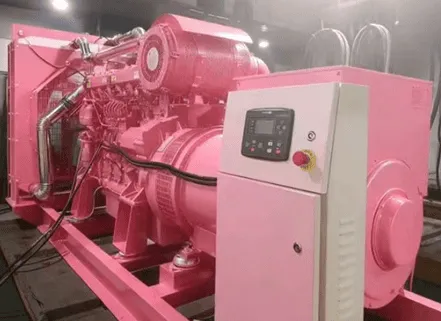
Shandong Hongrui Construction Machinery & Equipment Co., LTD combines product supply, R&D coordination, logistics, sales and after-sales service. The team brings 15 years of engine and machinery experience to configuration discussions and customized equipment projects.
- 01
Requirement review
Confirm load schedule, duty, site conditions, electrical standard, enclosure and required accessories.
- 02
Configuration proposal
Align the engine, alternator, controller, breaker and structure on one technical scope for buyer approval.
- 03
Production and checks
Build to the approved configuration and record the agreed inspection and test items before dispatch.
- 04
Packing and support
Coordinate export logistics, operating documents, recommended spares and after-sales communication for the destination.
- Learn more about Shandong HongruiContact the sales team
Lifecycle readiness
Maintenance Starts Before the Generator Is Installed
A standby set that rarely runs still needs disciplined inspection and exercising. A prime-power set needs service planning based on operating hours, load and environment. Always follow the selected engine, alternator and controller manuals.
Watch oil pressure, coolant temperature, voltage, frequency, load balance, exhaust condition, vibration and unusual noise.
Replace filters and fluids at the specified intervals; inspect belts, hoses, mounts, terminals, radiator condition and fuel quality.
Exercise the generator under an appropriate load, test ATS operation and document battery and charger condition rather than relying on an unloaded start alone.
Keep the filters, belts, sensors and controller/AVR items recommended for the selected model and local service conditions.
Buyer guide
Diesel Generator Set Procurement Questions
What is a diesel generator set?
It is a packaged power system that combines a diesel engine, alternator, base frame, cooling, starting, control and protection equipment. Depending on the project, it may also include an acoustic canopy or container, fuel tank, breaker, ATS, remote monitoring or paralleling controls.
How do I choose a diesel generator set for industrial use?
Start with the simultaneous running load and largest starting event, then define standby or prime duty, voltage, phase, frequency, site conditions, enclosure, ATS requirement and expected operating hours. Compare suppliers only after those inputs are written into the same technical scope.
Should I specify kW or kVA?
Use both. kW describes real power used by the load, while kVA describes apparent power and depends on power factor. The quotation should state the assumed power factor and show the matching kW/kVA rating.
Is a bigger generator always safer?
No. Undersizing can cause voltage dip and overload, but excessive oversizing increases capital cost and may leave a diesel engine running too lightly. The correct selection must satisfy steady load, starting transients, site derating and a justified expansion reserve.
Do I need an ATS?
Specify an automatic transfer switch when the generator must start and accept the critical load automatically after utility failure. Confirm switch rating, poles, transfer logic, interlocking and return-to-mains behavior with the electrical design.
What information is needed for an accurate price?
Provide required kW or kVA, duty, voltage, phase, frequency, main loads and starting methods, enclosure type, site conditions, ATS/control requirements, fuel-autonomy target, engine or alternator preferences, destination and documentation needs.
How should I evaluate a diesel generator supplier?
Ask for a complete technical schedule, component makes and model references, rating basis, test and inspection scope, warranty terms, manuals, spare-parts plan, export packing details and a clear list of exclusions. A reputable supplier should be able to explain why the proposed set matches the load and site.
How often should a standby diesel genset be maintained?
Follow the selected engine and generator manuals. Use calendar-based checks for batteries, fuel, fluids, leaks, alarms and ATS readiness, plus hour-based servicing for filters and fluids. Exercise and load testing should follow the site’s safety plan and manufacturer guidance.
Compare the Fuel and Support Path Before You Decide
Considering gas instead of diesel?
Review gas generator set types, operating conditions and fuel-availability trade-offs for projects with a dependable gas supply.
Explore Gas Generator Sets →Need a broader equipment discussion?
Share the application, destination and technical requirements with the sales team for coordinated equipment and logistics support.
Contact Zentramo →Send the Load List Before You Buy the Model Number
Tell us the connected loads, largest motor, duty, voltage, frequency, site conditions and preferred structure. We will help organize those inputs into a generator configuration and comparable quotation scope.
Helpful files: load schedule, single-line diagram, motor list, site photos and destination electrical requirements.