
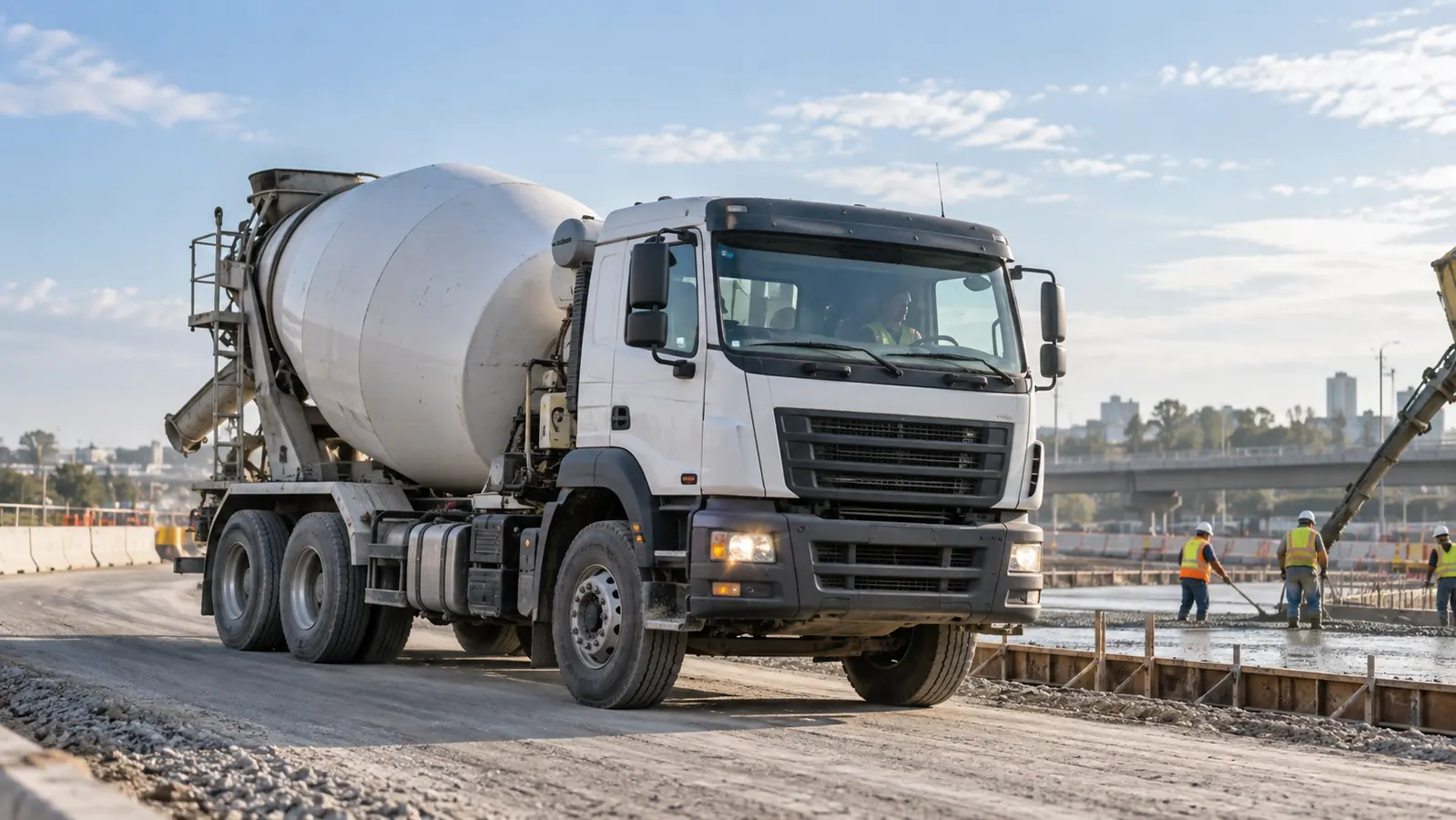
Mobile Cement Mixer Trucks Built Around the Delivery Cycle
Move ready-mixed concrete from the batching plant to the pour with a truck configuration matched to route access, legal payload, discharge conditions and fleet service needs.
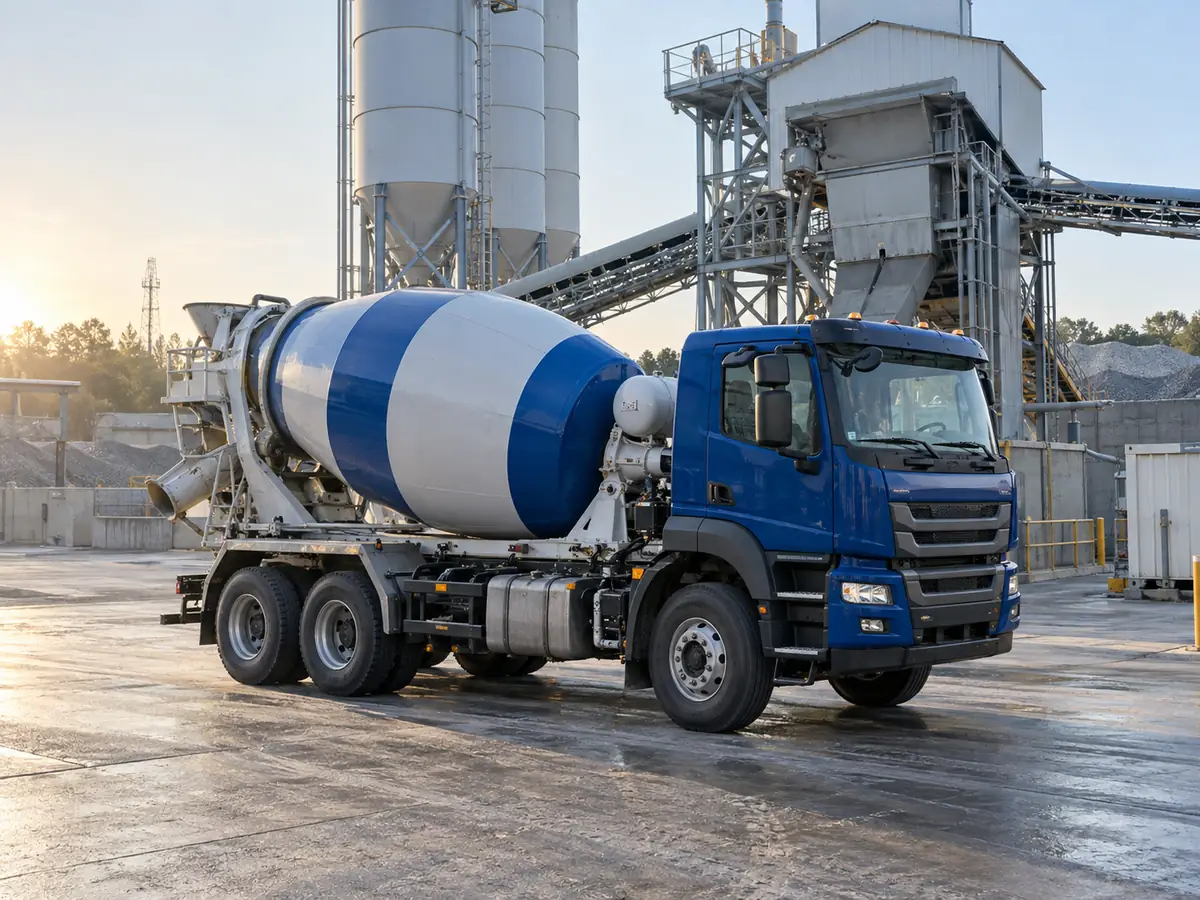
What Is a Mobile Cement Mixer Truck?
A mobile cement mixer truck in this product family is a road-going transit mixer. It receives concrete from a batching plant, keeps the load moving in a rotating drum during transport, and discharges at the jobsite.
Its primary job is transport and agitation—not loading raw aggregate with a front bucket and not continuously proportioning separate ingredients through a volumetric auger.
Selection Tip
If the project must produce concrete from raw materials at a remote site, review a self-loading mixer instead. If the operation needs continuous on-demand metering of separate ingredients, compare a volumetric system with the traditional drum workflow before choosing equipment.
Review self-loading mobile mixersTransit Drum, Self-Loading or Volumetric?
The best choice depends on where concrete is produced, how far it travels, how variable each pour is and which support system the operator can maintain.
| Decision point | Traditional transit drum mixer | Self-loading mixer | Volumetric mixer |
|---|---|---|---|
| Material state before travel | Receives batched concrete | Loads raw materials | Separate compartments |
| Where mixing or production happens | Transports/agitate | Mixes near workfront | Meters/mixes on demand |
| Typical dependency | Depends on batching/route | Plant access weak | Evaluate calibration/local rules |
| Best-fit operating pattern | Planned deliveries | Pours dispersed | Variable on-demand pours |
| Main buyer check | Route access & legal payload | Operator skill & raw material supply | Mix design & operator competence |
Select a Truck Class Around Payload, Access and Route Duty
The ranges below are practical planning bands for early comparison. Final drum capacity, legal payload, axle configuration, chassis and component package must be confirmed for the destination market and project.
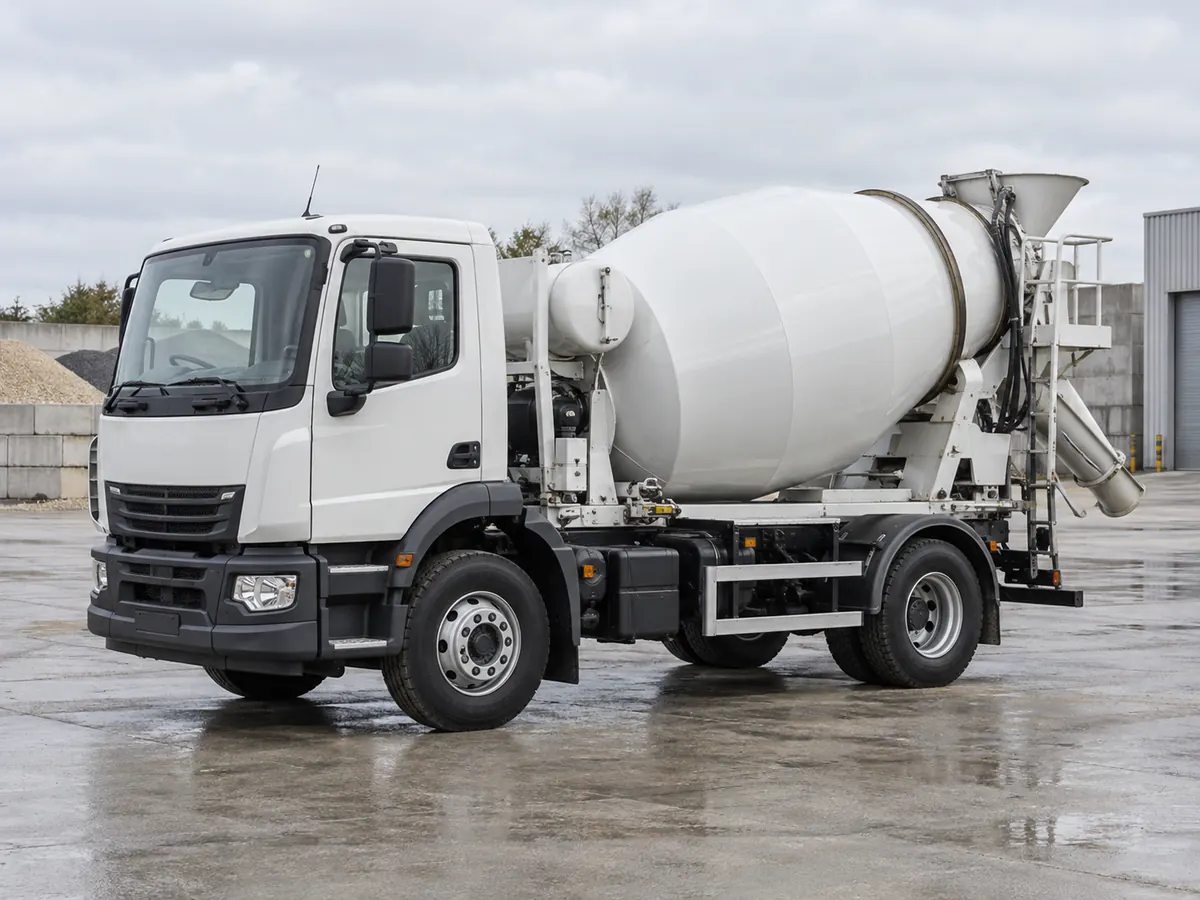
Compact Transit Mixer Trucks
A practical direction for smaller scheduled deliveries, tighter access and routes where overall dimensions and turning space matter as much as nominal drum size. Planning reference: commonly compared around 3–5 m³ and 4×2 layouts, subject to legal payload and final chassis confirmation.
- Narrowest road and gate
- Turning radius
- Bridge or axle limits
- Minimum economical delivery size
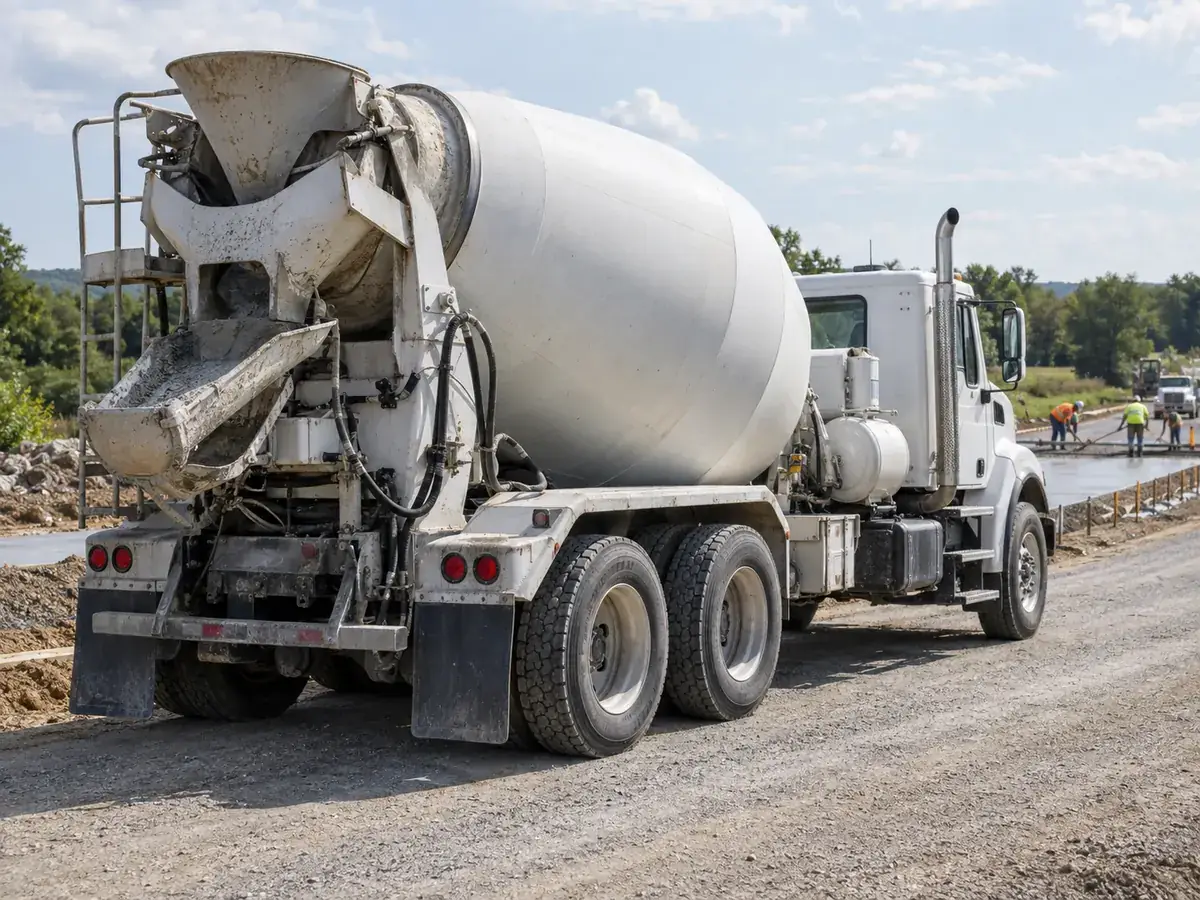
Medium Transit Mixer Trucks
Balances delivery volume, route flexibility and fleet utilization for recurring commercial and municipal ready-mix work. Planning reference: commonly compared around 6–10 m³ and 6×4 layouts, subject to GVW, axle load and local road rules.
- Daily trips
- Loaded route distance
- Site queue time
- Service and tyre availability
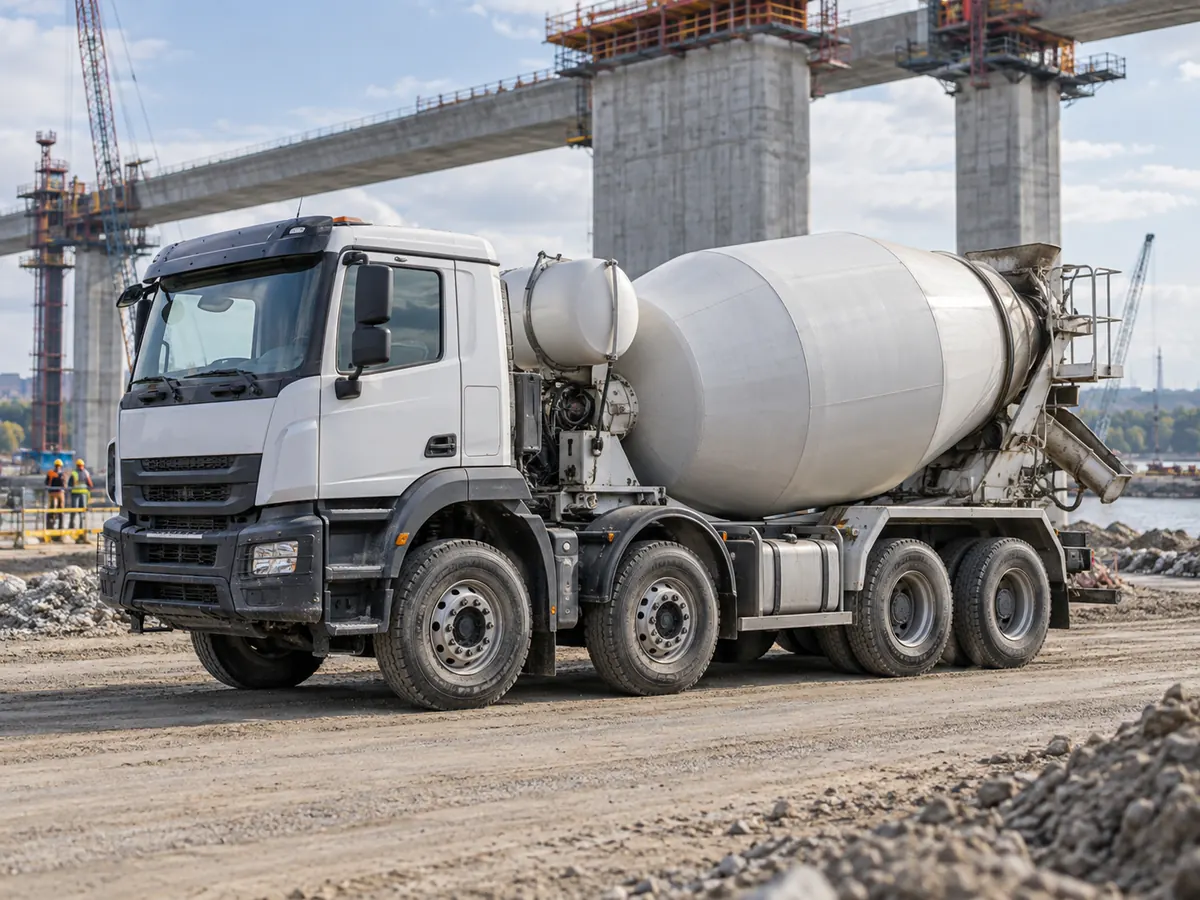
Heavy-Duty Transit Mixer Trucks
A larger-delivery direction for infrastructure and high-volume sites with suitable plant output, road access, axle limits and discharge space. Planning reference: commonly compared around 12–16 m³ and 8×4 layouts, subject to destination regulations and confirmed payload calculations.
- Legal gross weight
- Road and bridge limits
- Site maneuvering
- Cycle time & unloading capacity
Note: These planning bands are not universal legal classes or guaranteed stock. The confirmed quotation defines the supplied chassis, drum and component package.
A Larger Drum Does Not Automatically Deliver More Concrete Per Day
Nominal volume without legal payload
Leads to overload, registration issues, and severe tyre or axle risk.
No access measurement
Causes failure at the gate, restricted turning, or impossible discharge positioning.
Plant output and site timing ignored
Creates long queues, material degradation, and excessive waiting times.
Components without service planning
Results in extended downtime and unrecoverable concrete loads during failures.
Plan the Whole Plant-to-Pour Cycle
Batch & Load
Confirm mix design, loading volume and ticketing.
Agitate in Transit
Specified drum speed and continuous procedure.
Enter the Site
Access, ground stability, overhead clearance, maneuvering.
Position & Discharge
Align truck, chute, and receiving equipment safely.
Wash Down
Clean before residue hardens, follow wastewater rules.
Return & Inspect
Record defects, inspect wear, prepare next cycle.
Safety Note: Operating limits, drum speed, cleaning and discharge procedures must follow the supplied manual, site rules and local transport regulations.
Key Features to Compare Before Buying
Usable payload & drum rating
Density, legal GVW, axle distribution.
Chassis & axle layout
Match 4×2/6×4/8×4 to route, traction, registration, service.
Engine & emissions
Fuel type, altitude, climate, destination requirements.
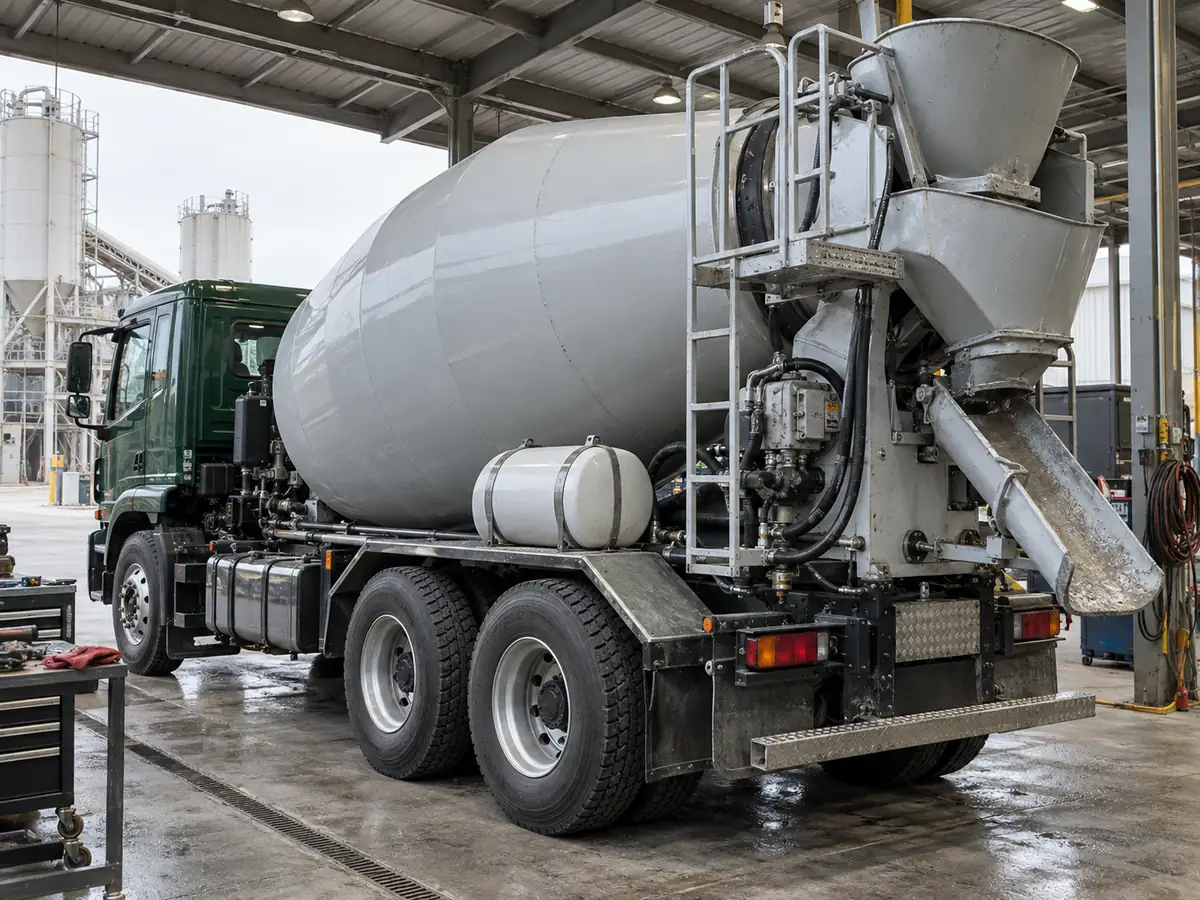
Drum geometry & blades
Agitation purpose, wear resistance, controls, cleaning access.
Hydraulic drive
Pump, motor, reducer, cooling, emergency provisions.
Loading & discharge
Inlet hopper, chute reach/extension, controls.
Water & wash-down
Tank capacity, pump, hose, wastewater management.
Safety & visibility
Cameras, alarms, lighting, platforms, guards, mandatory equipment.
Match the Truck to the Route, Not Just the Pour Size
| Decision factor | Compact direction | Medium direction | Heavy-duty direction | Confirm before quotation |
|---|---|---|---|---|
| Typical planning band | 3–5 m³ / 4×2 | 6–10 m³ / 6×4 | 12–16 m³ / 8×4 | Final drum volume & axes |
| Access and turning | Tight urban/residential | Standard commercial | Open infrastructure | Dimensions & turning radius |
| Delivery cycle | Short, frequent trips | Balanced daily routes | High-volume continuous | Plant output & site wait times |
| Legal payload sensitivity | Often limited by 2 axles | Subject to bridge formulas | Requires strict GVW check | Local road weight limits |
| Best-fit project pattern | Small pours, scattered | Municipal ready-mix | Large foundations/paving | Concrete required per day |
| Chassis service needs | Local light-truck parts | Standard heavy-duty parts | Specialized multi-axle | Destination service network |
| Shipping and destination setup | Easier export packing | Standard RoRo/Flatrack | High freight considerations | Packing plan & import duties |
Estimate Fleet Need From Cycle Time
Use measured plant loading time, loaded travel, site waiting, discharge, wash-down and return time. Add a realistic allowance for traffic and queue variability. This is a planning method, not a guaranteed production result.
Example Calculation
If a project needs 80 m³/day and a legally usable load is 8 m³, the plan starts at 10 trips. The fleet count then depends on the measured cycle time and available working hours.
Procurement Advantages of a Route-Matched Configuration
Clearer payload planning
Connect drum to chassis and legal limits accurately.
More predictable delivery cycles
Align plant output, route transit, and site unloading.
Easier component planning
Specify chassis, hydraulic, drum, and wear parts clearly.
Better quotation comparison
Compare like-for-like equipment, documents, spares, shipping—not headline capacity.
Avoid These Mixer Truck Buying Mistakes
Common Procurement Mistakes
- Buying on drum size alone without verifying payload.
- Ignoring legal GVW and axle distribution limits.
- Assuming the same emissions package works everywhere.
- Accepting unnamed or generic hydraulic components.
- Skipping route and discharge clearance measurements.
- Comparing FOB prices only, ignoring destination costs.
- Relying on online "top manufacturer" lists instead of specs.
Professional Verification
- Usable payload calculation based on density.
- Chassis and axle configuration confirmed.
- Engine and emissions documentation secured.
- Pump, motor, and reducer IDs clearly listed.
- Dimensions and turning radius verified for site.
- Packing, shipping, and destination charges estimated.
- Factory identity, config sheet, inspection, manuals, spares, and contract checked.
Build the Order Around a Verifiable Configuration
A professional mixer truck purchase should end with a configuration both sides can check against the route, destination rules and operating plan. Zentramo reviews the requested truck direction as an export configuration; final supply is defined by the confirmed quotation and contract.
What makes the best mixer truck for a construction site?
How do volumetric mixers differ from traditional drum mixers?
Which features matter most on a new mixer truck?
How should buyers verify a manufacturer or supplier?
Can Zentramo provide a truck near me?
Request a Mobile Cement Mixer Truck Configuration
Share the destination, batching-plant setup, legal load limits, route conditions, concrete required per day and preferred truck direction. We will use those details to discuss a suitable export configuration and the items that must be confirmed in the quotation.