Compact Self Loader Mixers for Restricted-Access Jobsites
Produce concrete where full-size mixer trucks and fixed batching equipment are impractical. A compact diesel self loader brings material loading, mixing, short-distance travel and discharge into one machine for narrow roads and scattered pours.
Final model, output, dimensions and configuration are confirmed in the quotation and contract.
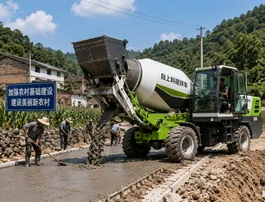
Is a Compact Self Loader Mixer the Right Fit?
Evaluate your jobsite constraints before selecting equipment.
Good Fit
- • Mobile or scattered work fronts.
- • Full-size transit mixers cannot access the site.
- • Repeated small batches are required.
- • No grid electricity or unstable power supply.
- • Separated loader, mixer, and transport crews cause delays.
Consider Another Setup
- • Ultra-high continuous volume at a fixed location.
- • Ready-mix trucks can arrive reliably and economically.
- • Site cannot safely accommodate the machine's turning envelope.
- • Local regulations prohibit specific diesel engines or mobile equipment.
Compact Models for Small Pours and Tight Access
Do not select by the capacity label alone. Confirm actual concrete yield, overall dimensions, turning space, loaded weight and discharge arrangement in the final configuration sheet.
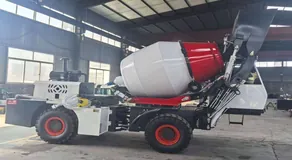
1.2 m³ Compact Self Loader Mixer
The most clearly documented compact direction for rural roads, small housing, drainage, repairs and scattered pours where machine footprint matters.
- Concrete yield: 1.2 m³/batch
- Published output: 4.8–6 m³/h
- Drum: 1,700 L
- Engine: 55 kW / 75 hp
- Drive: 4×4
- Published max speed: 25 km/h
- Published gradeability: 30%
- Published overall weight: 4,200 kg
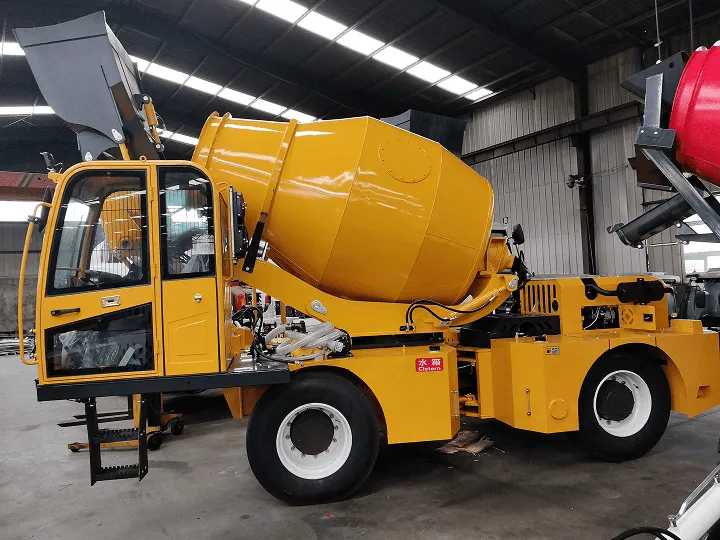
1.8–2.0 m³ Compact Direction
For buyers who need more concrete per cycle than the 1.2 m³ model while remaining in the compact class for housing, farm, repair and light civil projects.
- Available compact capacity direction within Zentramo’s published range.
- Diesel-powered integrated loading, mixing, movement and discharge.
- Final engine, drum, output, dimensions, weight and options: Confirm on quotation.
How Does a Self Loader Mixer Work?
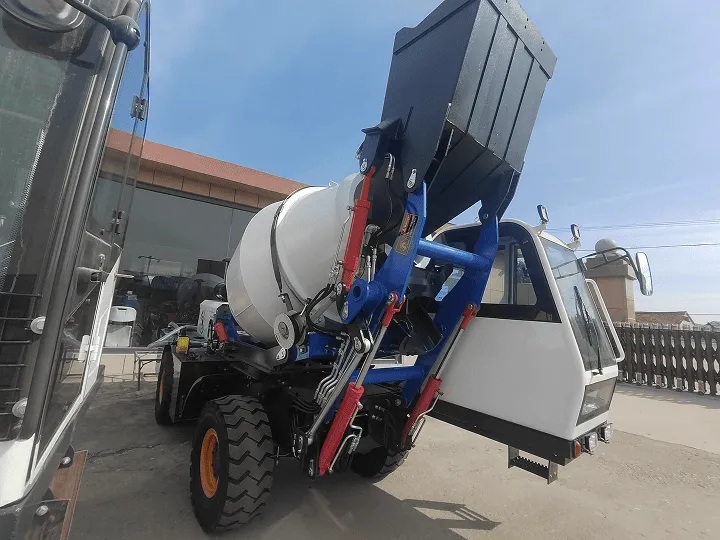
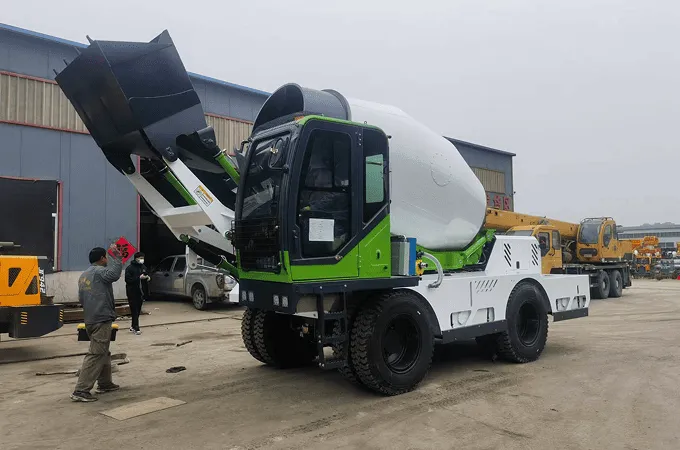
A self loader mixer combines the work normally divided among a loader, mixer and short-distance transport equipment. One trained operator controls the cycle, subject to the confirmed machine configuration and site rules.
Scoop
Front bucket loads aggregates.
Measure
Weighing & water control.
Load
Materials enter the drum.
Mix
Drum rotation blends mix.
Travel
4x4 drive to pour location.
Discharge
Pour and wash down.
Why Compact Self Loaders Work on Small, Difficult Sites
Pain: Narrow access blocks full-size trucks
Response: Compact chassis matched to measured route and turning area.
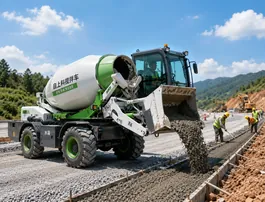
Pain: Small pours make ready-mix scheduling inefficient
Response: Repeated batches closer to work front on your own schedule.
Pain: Too many handoffs slow the crew
Response: Integrate loading, mixing, movement and discharge into one machine.
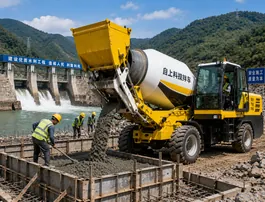
Pain: Power outages stop electric mixers
Response: Onboard diesel operates entirely without grid electricity.
These are scenario-based potential outcomes, not guarantees. Results depend on utilization, local wages, fuel price, concrete demand, material logistics, operator skill, downtime avoided, financing and the equipment replaced.
Keep Mixing When Grid Power Is Not Available
The onboard diesel engine supports normal machine operation without an external electrical connection. Before ordering, confirm local fuel quality, emissions rules, operating altitude, ambient temperature and maintenance support.
- Onboard diesel operation
- Suitable for remote and temporary work fronts
- Less exposure to power outages
- Fuel, emissions, altitude and temperature must be specified
Specifications That Decide Whether a Compact Mixer Will Fit
Do not assume standard dimensions. Verify these 8 critical factors for your specific site.
1. Actual yield per batch
Determines how many trips are needed for a pour.
Confirm on quotation2. Overall W / H / L
Dictates if it can pass through gates and under bridges.
Confirm on quotation3. Turning envelope
Required space to load, maneuver, and align for discharge.
Confirm on quotation4. Loaded weight
Affects ground bearing pressure on soft rural soil.
Confirm on quotation5. Engine & emissions
Must comply with local environmental and import laws.
Confirm on quotation6. 4×4 / Gradeability
Traction required for muddy or inclined access routes.
Confirm on quotation7. Weighing & water
Ensures repeatable mix quality per batch.
Confirm on quotation8. Discharge reach
How far and in what direction the chute can deliver.
Confirm on quotation1.2 vs 1.8–2.0 m³: Choose by Access and Pour Rhythm
Choose the smallest machine that safely meets the required batch rhythm; unused capacity still adds cost, weight and space demand.
| Decision Factor | 1.2 m³ Direction | 1.8–2.0 m³ Direction | Before Ordering |
|---|---|---|---|
| Concrete per pour | 1.2 m³ verified yield | Confirm on quotation | Calculate total volume needed |
| Expected cycles/day | Higher frequency | Confirm on quotation | Match to crew placing speed |
| Narrowest access | Most compact footprint | Confirm on quotation | Measure gates and paths |
| Turning/operating space | Minimal radius | Confirm on quotation | Check loading pile distance |
| Ground bearing | ~4,200 kg empty | Confirm on quotation | Assess soil stability |
| Engine/emissions | Published 55 kW | Confirm on quotation | Verify local laws |
| Transport/shipping | Confirm shipping method | Confirm on quotation | Check unloading limits |
| Best-fit work | Extreme tight access, repairs | Slightly larger foundations | Review project portfolio |
Built Around Small, Dispersed Work Fronts
Village Roads and Drainage
Navigating tight unpaved rural routes where transit mixers sink or get stuck.
Small Housing Foundations
Mixing directly beside the trench, eliminating wheelbarrow relays.
Farm and Irrigation Work
Independent operation far from municipal batching plants.
Repair and Municipal Maintenance
Quick mobilization for scattered curb, sidewalk, or utility repairs.
Rent or Buy a Self Loader Mixer?
Renting can reduce commitment for a short, local project when a correctly configured machine and trained operator are available nearby. Purchasing becomes more attractive when utilization is recurring, mobilization is expensive or the machine must serve multiple work fronts. Compare total project cost, not only the daily rental rate or purchase price.
| Factor | Renting may fit | Purchasing may fit |
|---|---|---|
| Project duration | Short-term (weeks) | Long-term (months/years) |
| Operating days/month | Sporadic or low | High utilization |
| Correct model availability | Exact size available locally | Local rental fleet lacks compacts |
| Mobilization cost | Low (local delivery) | High (remote site) |
| Operator responsibility | Provided by rental firm | In-house crew training |
| Maintenance capability | Rely on rental depot | In-house mechanic available |
| Repeat work | One-off project | Pipeline of similar jobs |
| Resale/fleet strategy | No capital tied up | Building company asset base |
Buying a Compact Self Loader Mixer for the United States
Zentramo can discuss export supply and project configuration. Local availability, registration, emissions compliance, import classification, dealer status and service coverage must be verified for the buyer’s state and intended use before ordering.
5-Step Import & Compliance Check
- 1 Confirm exact jobsite use and whether on-road registration is required.
- 2 Verify engine emissions tier matches Federal (EPA) and State (e.g., CARB) requirements.
- 3 Confirm dimensions and loaded weight for inland transport and unloading.
- 4 Check import classification, duties, taxes, and insurance with a qualified customs broker.
- 5 Secure written confirmation of spare parts routing, diagnostic manuals, and training support.
Midwest Dealer Verification
A reputable dealer or supplier should identify the legal business, machine origin, exact configuration, warranty provider, parts route, service response and final landed scope. Do not rely on “top-rated” labels without verifiable evidence.
Compare Suppliers by Evidence, Not Ranking Claims
There is no responsible universal “best brand” for every compact jobsite. The best-fit supplier is the one that can document a compliant configuration, realistic output, support scope and landed delivery for the buyer’s location.
Evidence Checklist
- Exact model and actual yield
- Engine/emissions documents
- Component list
- Weighing/water options
- Factory test/pre-shipment checks
- Manuals/parts list
- Warranty terms
- Service response
- Packing/shipping scope
- Verifiable business identity
Preventive Maintenance for a Self-Propelled Compact Mixer
Follow the manual and maintenance schedule supplied with the selected configuration. A generic portable-mixer maintenance guide is not a substitute.
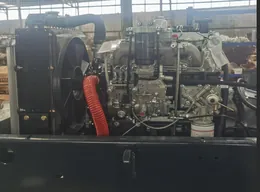
Power & Drivetrain
- Daily visual inspection & cleaning.
- Engine oil, filters, and cooling system checks.
- Tyres, brakes, axles, and steering joints.
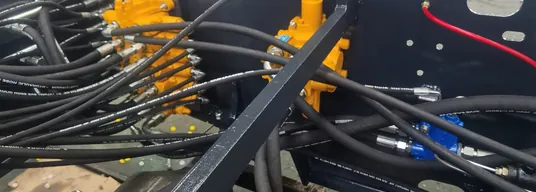
Hydraulics & Control
- Hydraulic hoses, cylinder seals, and oil temperature.
- Water system pumps and metering.
- Weighing system periodic calibration (if equipped).
Mixing & Discharge
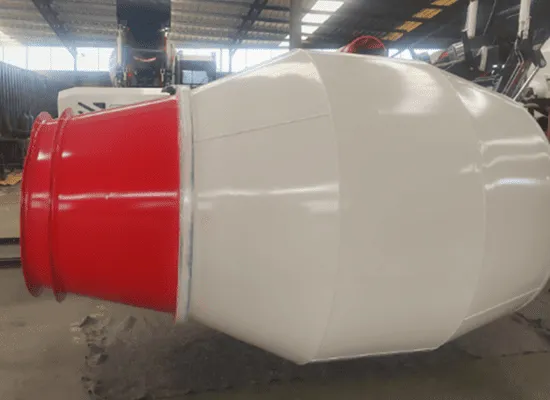
- Drum interior daily washdown.
- Mixing blades, rollers, and discharge chute wear.
- Stocking key spares and knowing emergency discharge procedures.
What Does a Compact Self Loader Mixer Cost?
A responsible export quote depends on the exact capacity, engine and emissions package, drivetrain, tyres, weighing and water systems, drum functions, spare parts, shipping method, destination duty and local delivery. A single online average cannot represent the final landed cost.
+ Options
& Documents
& Insurance
& Tax
& Commissioning
+ Operating Cost
Confirm the Compact Machine Before It Ships
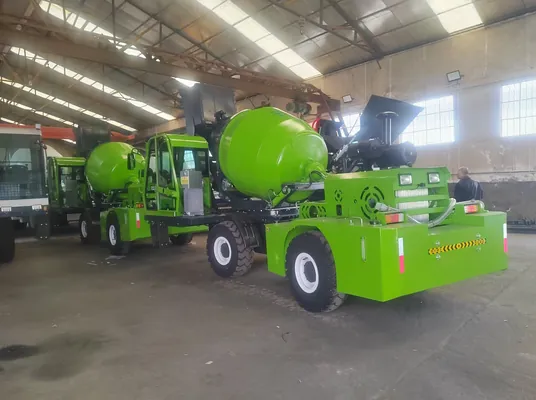
A professional order should end with a configuration both sides can verify. Ask for the final model, actual yield, overall dimensions, operating weight, engine and emissions details, drive and steering system, tyres, drum and discharge functions, weighing and water options, packing list, manuals, planned spare parts, shipping dimensions, warranty terms and inspection scope in the quotation and contract.
Frequently Asked Questions
What are the main advantages of a self-loading concrete mixer on a jobsite?
How does a self loader mixer work?
Which specifications matter most for a compact model?
Should I rent or purchase?
Where can I buy a self loader mixer near me?
Do you have rental services in the United States?
Which brands are top-rated?
How can I verify a dealer in the Midwest or elsewhere?
What routine maintenance is needed?
Can it save 60% labor, improve efficiency by 40% and pay back in six months?
Continue Your Equipment Review
Match a Compact Self Loader Mixer to Your Access and Pour Plan
Tell us the required concrete per pour, daily demand, narrowest access width, height clearance, turning area, terrain, gradient, ground condition, grid situation, fuel and emissions requirements, destination and expected operating days.